
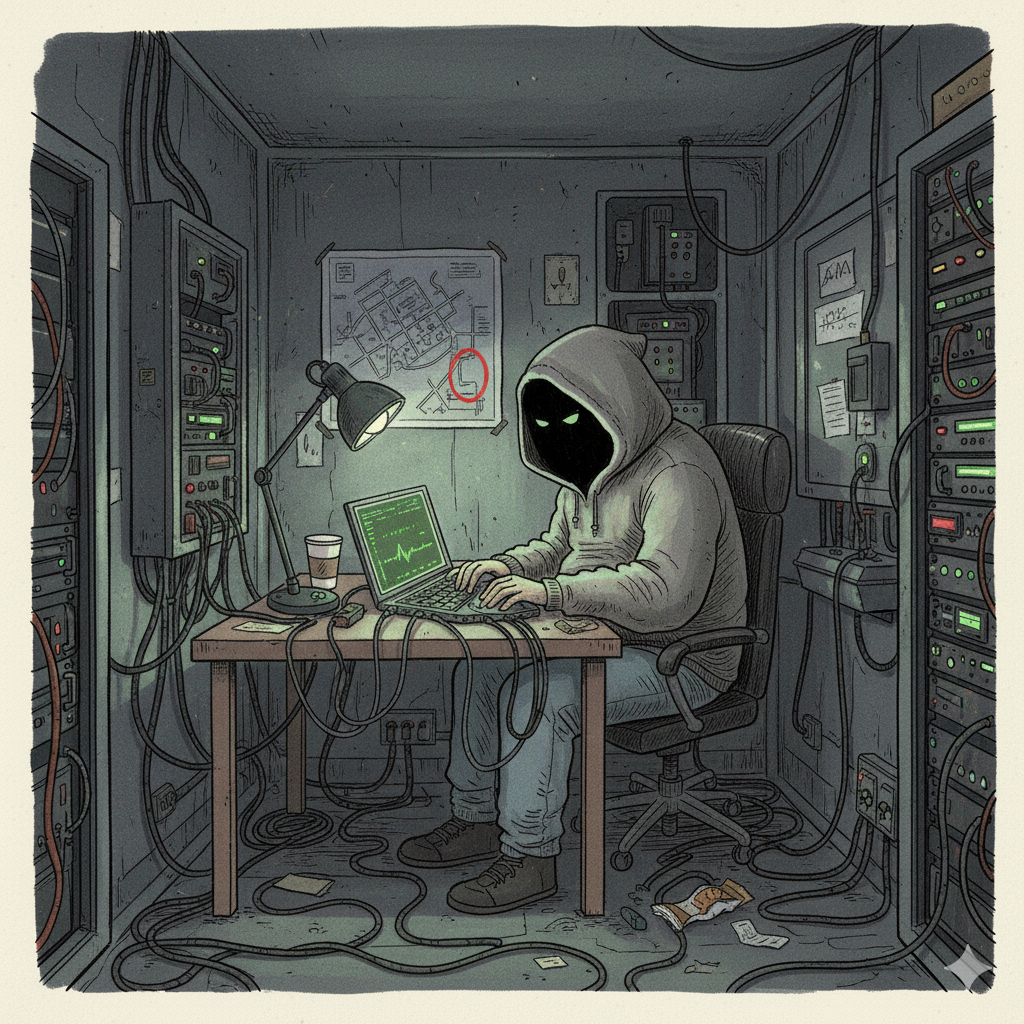
It’s a three way call and your business doesn’t know.
In the movies, a cyberattack is a high-drama event with flashing red lights and scrolling green code. In the real world, it’s much more subtle. It’s a “three-way call” where your business is talking to its customers, and a silent third party is listening in, recording every word, and you have no idea they’re on the line.
Most organizations wait for a “boom” to realize they’ve been hit. But the most dangerous compromises are the ones that stay quiet.
The Anatomy of a Silent Breach
Cybercriminals aren’t always looking to lock your files and demand a ransom immediately. Often, they want to turn your infrastructure into a silent partner for their own gains.
Here are three common ways your business might be “hacked” right now without a single alert going off:
- The Keylogger: This is the digital equivalent of someone standing over your shoulder. Every password, credit card number, and private email is sent directly to a remote server.
- The Crypto-Jacker: Instead of stealing your data, they steal your power. By installing a bitcoin miner, hackers use your hardware and electricity to mine cryptocurrency, slowing your systems to a crawl and spiking your utility bills.
- The Botnet Recruitment: Your servers might be performing perfectly well for you, while simultaneously participating in a massive, coordinated DDoS attack on a government agency or another corporation.
Why You Haven’t Noticed (Yet)
Small to mid-sized businesses are often the preferred targets for these “quiet” hacks because they typically lack Continuous Monitoring. If you aren’t looking at your outgoing traffic or CPU spikes, these intruders can live in your system for an average of over 200 days before detection.
The Reality Check: A silent compromise isn’t just a technical glitch; it’s a liability. While they sit on your “three-way call,” they are gathering the intelligence needed to eventually launch a full-scale ransomware attack or identity theft scheme.